How Sound, Frequency and Intention Can Support Energy Balance
Music has always had the power to move us. A single piece of music can soften tension, awaken memories, help us cry, lift our mood, calm the nervous system or bring us back into the present moment. Within chakra healing, music becomes more than background sound. It becomes a gentle energetic companion that can help the body, mind and emotions return to a more balanced state.
Chakra healing with music combines sound, vibration, rhythm, meditation and focused intention to support the seven main energy centres of the body. Each chakra is associated with different emotional, physical and spiritual themes. When these energy centres feel blocked, depleted or overstimulated, we may experience a sense of imbalance in our thoughts, emotions, relationships, creativity, confidence or inner peace.
Music offers a natural way to work with these energy centres. Through calming melodies, sustained tones, healing frequencies, rhythmic patterns and meditative listening, sound can help create the inner conditions for relaxation, emotional release and energetic realignment.
This complete guide explores what the chakras are, how music can support chakra healing, the emotional themes of each chakra, suggested sounds and frequencies, and how to create your own chakra music healing practice.
Gentle note: Chakra healing and healing music are complementary wellbeing practices. They are not a replacement for medical, psychological or professional support. If you are experiencing serious physical or mental health symptoms, please seek advice from a qualified professional.
Explore the Seven Chakras
If you would like to focus on a particular chakra, explore the individual Music Energetics guides and meditations below:
- Root Chakra Healing Music for Grounding and Stability
- Sacral Chakra Healing Music – The Spirit of Creativity
- Solar Plexus Chakra Meditation for Confidence and Intention
- Heart Chakra Music for Inner Peace and Self Love
- Throat Chakra Meditation Music for Authentic Expression
- Third Eye Chakra Meditation Music for Calmness and Intuition
- Crown Chakra Meditation Music for Peace and Spiritual Connection
What Are Chakras?
The word chakra comes from Sanskrit and is often translated as wheel or disc. In many spiritual and energetic traditions, chakras are understood as centres of energy within the subtle body. They are believed to receive, process and transmit life-force energy through different aspects of our being.
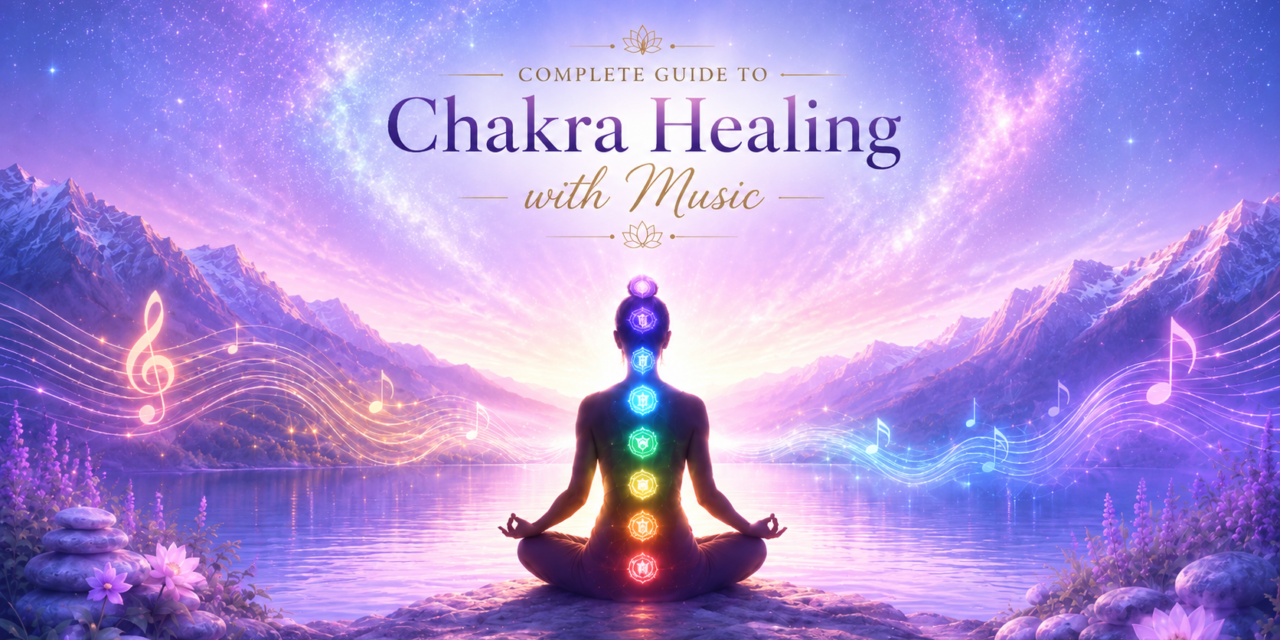
Although chakra systems vary across traditions, the most commonly known model focuses on seven main chakras aligned along the spine, from the base of the body to the crown of the head:
- Root Chakra – safety, grounding and survival
- Sacral Chakra – emotion, creativity and pleasure
- Solar Plexus Chakra – confidence, willpower and personal strength
- Heart Chakra – love, compassion and emotional healing
- Throat Chakra – communication, truth and expression
- Third Eye Chakra – intuition, insight and inner vision
- Crown Chakra – spiritual connection, peace and higher awareness
Each chakra is often linked with a colour, element, location in the body, emotional theme and spiritual quality. When energy flows freely through the chakras, we may feel more grounded, open, creative, confident, loving, expressive, intuitive and connected. When energy feels blocked or excessive, we may feel restricted, emotionally unsettled, disconnected or out of balance.
What Is Chakra Healing?
Chakra healing is the practice of bringing awareness, balance and harmony to the body’s energy centres. It may involve meditation, breathwork, yoga, visualisation, affirmations, crystals, colour therapy, energy work or sound healing.
The purpose is not to force the body or mind to change. Instead, chakra healing creates a supportive space where blocked emotions, stagnant energy and inner tension can begin to soften.
For example:
- A person with root chakra imbalance may feel anxious, unsafe or disconnected from the body.
- A person with sacral chakra imbalance may feel emotionally blocked, creatively stuck or disconnected from pleasure.
- A person with solar plexus imbalance may struggle with confidence, motivation or personal boundaries.
- A person with heart chakra imbalance may find it difficult to forgive, trust or receive love.
- A person with throat chakra imbalance may suppress their truth or struggle to express themselves.
- A person with third eye imbalance may feel confused, mentally overloaded or disconnected from intuition.
- A person with crown chakra imbalance may feel spiritually disconnected or lacking meaning.
Chakra healing with music gently works with these areas by using sound to help the listener relax, reflect, release and reconnect.
Why Music Is Powerful for Chakra Healing
Music affects us on many levels at once. It can influence breathing, heart rate, mood, memory, attention and emotional processing. A slow, soothing piece of music can help the body settle into a calmer state. A deep drone or low-frequency sound can create a feeling of grounding. A gentle piano melody can support emotional release. A spacious ambient track can encourage meditation and inner stillness.
In chakra healing, music is powerful because it works through vibration and feeling rather than intellectual effort. You do not need to understand music theory or spiritual philosophy for sound to affect you. You simply listen, breathe and allow the music to meet you where you are.
Music can support chakra healing by:
- Calming the nervous system
- Encouraging deeper breathing
- Supporting meditation and mindfulness
- Helping emotions surface and release
- Creating a sense of safety and grounding
- Supporting visualisation and intention
- Enhancing spiritual connection
- Helping the listener focus on a specific chakra theme
You might also be interested in my article how music affects the brain.
Sound, Vibration and Energy
Everything in the physical world vibrates at some level. Sound is created by vibration moving through air, water or another medium. When we listen to music, these vibrations are received not only by the ears but also by the body.
This is why low bass tones can feel physical, why a singing bowl can seem to shimmer through the room, and why a beautiful melody can create goosebumps. Sound is not only heard; it is felt.
In chakra healing, sound is often used to bring awareness to specific areas of the body. For example, a deep drum or low drone may support the root chakra, while higher bell-like tones may support the crown chakra. Vocal toning, chanting, mantra, singing bowls, gongs, tuning forks and healing music compositions can all be used to focus energy and intention.
The aim is not necessarily to “fix” a chakra instantly. Instead, healing music helps create a vibrational environment where the body and energy field can begin to rebalance naturally.
Chakra Frequencies and Healing Music
Many chakra healing practices associate each chakra with a particular sound, note or frequency. Different systems use different correspondences. Some focus on musical notes, some use solfeggio frequencies, and others use intuitive soundscapes created around the emotional quality of each chakra.
A commonly used chakra frequency guide is:
| Chakra | Common Frequency Association | Musical Theme |
|---|---|---|
| Root Chakra | 396 Hz | Safety, grounding, release of fear |
| Sacral Chakra | 417 Hz | Creativity, emotion, change |
| Solar Plexus Chakra | 528 Hz | Confidence, transformation, empowerment |
| Heart Chakra | 639 Hz | Love, compassion, connection |
| Throat Chakra | 741 Hz | Truth, expression, clarity |
| Third Eye Chakra | 852 Hz | Intuition, insight, perception |
| Crown Chakra | 963 Hz | Spiritual connection, higher awareness |
These frequencies are often used in meditation music, sound baths and chakra balancing tracks. However, it is important to understand that healing does not come from frequency alone. The emotional tone, musical intention, rhythm, harmony, space, silence and the listener’s own openness all play a role.
A piece of chakra healing music may include specific frequencies, but it should also feel supportive, calming and emotionally resonant.
The Seven Chakras and How Music Can Support Each One
1. Root Chakra: Music for Grounding and Safety
The root chakra, also known as Muladhara, is located at the base of the spine. It is connected with survival, stability, physical safety, grounding, trust and belonging.
When the root chakra feels balanced, you may feel steady, present, secure and connected to your body. When it feels imbalanced, you may experience anxiety, fear, restlessness, insecurity or difficulty feeling settled.
Emotional themes of the root chakra
- Safety
- Stability
- Grounding
- Trust
- Physical presence
- Connection to the Earth
- Survival needs
Signs the root chakra may need support
- Feeling anxious or unsettled
- Difficulty relaxing
- Feeling disconnected from the body
- Restlessness or overthinking
- Fear around money, home or security
- A sense of not belonging
Music for the root chakra
Root chakra music often uses deep, steady and earthy sounds. Lower tones, slow rhythms, drums, drones, cello, deep piano notes and grounding ambient textures can help create a sense of stability.
Suggested musical qualities:
- Slow tempo
- Deep bass tones
- Repetitive rhythm
- Earthy percussion
- Warm drones
- Minimal melodies
- Spacious, steady soundscapes
Root chakra listening practice
Sit or lie down comfortably. Place your awareness at the base of your spine, legs and feet. As the music plays, imagine roots extending from your body into the Earth. With each breath, feel yourself becoming heavier, calmer and more supported.
You might silently repeat:
I am safe. I am grounded. I am supported.
For a deeper practice, explore my Root Chakra Healing Music for Grounding and Stability, including an original grounding music track and guided listening suggestions.
2. Sacral Chakra: Music for Emotion and Creativity
The sacral chakra, also known as Svadhisthana, is located in the lower abdomen. It is associated with emotion, creativity, pleasure, sensuality, movement, relationships and the ability to flow with life.
When the sacral chakra is balanced, you may feel creative, emotionally open, connected to pleasure and able to move through change. When imbalanced, you may feel emotionally blocked, creatively stuck, overly dependent, numb or overwhelmed by feelings.
Emotional themes of the sacral chakra
- Creativity
- Emotion
- Pleasure
- Flow
- Sensuality
- Intimacy
- Change
- Inner movement
Signs the sacral chakra may need support
- Creative blocks
- Emotional numbness
- Feeling overwhelmed by emotions
- Difficulty enjoying life
- Fear of change
- Disconnection from the body
- Relationship patterns based on dependency or avoidance
Music for the sacral chakra
Sacral chakra music often has flowing, fluid and expressive qualities. Gentle piano, warm strings, soft percussion, water sounds, sensual rhythms and emotionally moving melodies can support this chakra.
Suggested musical qualities:
- Flowing rhythm
- Warm melodic movement
- Water-like textures
- Gentle emotional build
- Soft percussion
- Expressive piano or strings
- Music that encourages movement or release
Sacral chakra listening practice
Place your awareness in the lower abdomen. Breathe gently into this area. As the music plays, imagine a warm orange light moving like water. Allow emotions to rise without judging them. You may feel sadness, joy, tenderness or creative inspiration.
You might silently repeat:
I allow myself to feel. I allow myself to create. I flow with life.
For a deeper practice, explore my Sacral Chakra Healing Music – The Spirit of Creativity, featuring original music, the VAM mantra and imagery inspired by the element of water.
3. Solar Plexus Chakra: Music for Confidence and Inner Power
The solar plexus chakra, also known as Manipura, is located around the upper abdomen. It is connected with confidence, willpower, personal identity, motivation, discipline and self-worth.
When the solar plexus chakra is balanced, you may feel capable, focused, confident and able to take action. When imbalanced, you may struggle with self-doubt, low motivation, people-pleasing, anger, control issues or fear of being seen.
Emotional themes of the solar plexus chakra
- Confidence
- Personal power
- Self-worth
- Motivation
- Direction
- Boundaries
- Courage
- Inner fire
Signs the solar plexus chakra may need support
- Low confidence
- Fear of taking action
- Difficulty setting boundaries
- Feeling powerless
- Procrastination
- Harsh self-criticism
- Anger or frustration
- Over-controlling behaviour
Music for the solar plexus chakra
Solar plexus music often benefits from warmth, brightness and gentle strength. Rhythmic piano, uplifting harmonies, steady percussion, warm synths and music with a sense of forward movement can help awaken confidence and vitality.
Suggested musical qualities:
- Warm tones
- Rhythmic movement
- Bright harmonic colours
- Moderate tempo
- Gentle build in intensity
- Empowering melodies
- A sense of strength without aggression
Solar plexus listening practice
Bring your attention to the area above the navel. Imagine a golden yellow light growing brighter with each breath. As the music plays, feel your inner fire returning. Let the sound remind you that you are allowed to take up space and move forward.
You might silently repeat:
I am strong. I trust myself. I act with courage.
For a deeper practice, explore my Solar Plexus Chakra Meditation for Intention and Manifestation, combining original piano music, the RAM mantra and guided reflection to support confidence, focus and purposeful action.
4. Heart Chakra: Music for Love, Compassion and Emotional Healing
The heart chakra, also known as Anahata, is located in the centre of the chest. It is associated with love, compassion, forgiveness, grief, connection and emotional healing.
When the heart chakra is balanced, you may feel loving, open, peaceful and able to give and receive care. When imbalanced, you may feel guarded, lonely, resentful, grief-heavy or afraid of vulnerability.
Emotional themes of the heart chakra
- Love
- Compassion
- Forgiveness
- Grief healing
- Emotional openness
- Connection
- Trust
- Kindness
Signs the heart chakra may need support
- Difficulty trusting others
- Holding onto grief or resentment
- Fear of vulnerability
- Feeling emotionally closed
- Loneliness
- Giving too much without receiving
- Difficulty forgiving yourself or others
Music for the heart chakra
Heart chakra music often uses gentle, warm and emotionally tender sounds. Soft piano, strings, choir-like pads, breathy textures, gentle harmonies and heartfelt melodies can help soften emotional armour.
Suggested musical qualities:
- Gentle piano
- Warm strings
- Soft vocal tones
- Tender melodic phrases
- Slow emotional pacing
- Spacious harmonies
- Music that allows tears or release
Heart chakra listening practice
Place one hand over your heart. Breathe into the chest. As the music plays, imagine a green or soft pink light opening gently in the heart centre. You do not need to force love or forgiveness. Simply allow the music to soften the space around your heart.
You might silently repeat:
I am open to love. I allow healing. I offer compassion to myself.
For a deeper practice, explore my Heart Chakra Music for Inner Peace and Self Love, created as a gentle musical space for reflection, self-love and emotional balance.
5. Throat Chakra: Music for Truth and Expression
The throat chakra, also known as Vishuddha, is located in the throat area. It is connected with communication, truth, voice, self-expression, authenticity and listening.
When the throat chakra is balanced, you may express yourself clearly and honestly while also listening with presence. When imbalanced, you may suppress your truth, speak harshly, fear judgement or feel blocked creatively.
Emotional themes of the throat chakra
- Communication
- Truth
- Self-expression
- Authenticity
- Listening
- Voice
- Creative expression
- Clarity
Signs the throat chakra may need support
- Difficulty speaking up
- Fear of being judged
- Suppressing emotions or needs
- Talking too much to avoid feeling
- Feeling creatively blocked
- Struggling to express ideas clearly
- Holding tension in the throat, jaw or neck
Music for the throat chakra
Throat chakra music often includes clear tones, vocal textures, chanting, singing bowls, bells, flute and airy soundscapes. Music that encourages humming, toning or singing can be especially supportive.
Suggested musical qualities:
- Clear, open tones
- Vocal harmonies
- Chanting or mantra
- Bells or singing bowls
- Airy textures
- Gentle flute
- Space for humming or vocal release
Throat chakra listening practice
Sit comfortably and relax the jaw. As the music plays, breathe into the throat area. If it feels natural, gently hum along with the music. Let the vibration move through your throat, chest and face. You do not need to sing perfectly. The healing is in allowing your voice to exist.
You might silently repeat:
My voice matters. I speak my truth with kindness. I express myself freely.
For a deeper practice, explore my Throat Chakra Meditation Music for Authentic Expression, using original music and meditation to support self-expression, reflection and connection with your voice.
6. Third Eye Chakra: Music for Intuition and Inner Vision
The third eye chakra, also known as Ajna, is located between the eyebrows. It is associated with intuition, insight, imagination, inner vision, dreams, clarity and perception.
When the third eye chakra is balanced, you may feel mentally clear, intuitive and connected to your inner guidance. When imbalanced, you may feel confused, mentally overwhelmed, disconnected from intuition or trapped in overthinking.
Emotional themes of the third eye chakra
- Intuition
- Insight
- Inner vision
- Imagination
- Mental clarity
- Dream awareness
- Perception
- Spiritual awareness
Signs the third eye chakra may need support
- Overthinking
- Mental fog
- Difficulty trusting intuition
- Feeling disconnected from inner guidance
- Too much fantasy without grounding
- Confusion about direction
- Difficulty meditating
Music for the third eye chakra
Third eye music often uses spacious, mysterious and meditative soundscapes. Soft drones, high piano notes, subtle bells, ambient textures, gentle binaural-style movement and slow harmonic changes can support inward focus.
Suggested musical qualities:
- Spacious ambient textures
- Soft high tones
- Gentle bells
- Slow harmonic movement
- Dreamlike melodies
- Minimal rhythm
- Meditative atmosphere
Third eye listening practice
Close your eyes and bring your attention to the space between your eyebrows. Let the music draw your awareness inward. Notice images, colours, memories or sensations without trying to control them. Allow insight to arise naturally.
You might silently repeat:
I trust my inner wisdom. I see clearly. I listen within.
For a deeper practice, explore my Third Eye Chakra Meditation Music for Calmness, Intuition and Sleep, created to provide a peaceful space for relaxation, inner reflection and intuitive awareness.
7. Crown Chakra: Music for Peace and Spiritual Connection
The crown chakra, also known as Sahasrara, is located at the top of the head. It is associated with spiritual connection, higher consciousness, divine awareness, unity, surrender and inner peace.
When the crown chakra is balanced, you may feel connected, peaceful, inspired and open to something greater than the personal self. When imbalanced, you may feel spiritually disconnected, isolated, overly intellectual or ungrounded.
Emotional themes of the crown chakra
- Spiritual connection
- Peace
- Higher awareness
- Surrender
- Unity
- Meaning
- Stillness
- Divine guidance
Signs the crown chakra may need support
- Feeling spiritually disconnected
- Lack of meaning or inspiration
- Over-identification with thoughts
- Feeling isolated from life
- Difficulty surrendering control
- Disconnection from prayer, meditation or stillness
- Feeling ungrounded after spiritual practice
Music for the crown chakra
Crown chakra music often uses very spacious, light and ethereal sounds. Choir-like pads, crystal bowls, soft chimes, high frequencies, gentle drones and long silences can create a feeling of expansion and peace.
Suggested musical qualities:
- Ethereal textures
- High, shimmering tones
- Crystal bowls or chimes
- Very slow tempo
- Long spacious notes
- Gentle silence between sounds
- A feeling of openness and stillness
Crown chakra listening practice
Sit or lie down in stillness. Imagine a soft violet or white light above the crown of your head. As the music plays, allow your awareness to open upward while staying connected to your breath and body. Let the music become a doorway into peace.
You might silently repeat:
I am connected. I surrender. I am open to peace.
For a deeper practice, explore my Crown Chakra Meditation Music for Peace and Spiritual Connection, featuring original music created for stillness, reflection and a deeper sense of spiritual connection.
How to Use Chakra Healing Music in Daily Life
Chakra healing music can be used in many simple ways. You do not need a complicated ritual. The most important ingredients are presence, intention and consistency.
1. Choose One Chakra to Focus On
Start by noticing what you are feeling. Are you anxious and ungrounded? You may want root chakra music. Are you emotionally blocked? Sacral chakra music may help. Are you struggling to speak your truth? Try throat chakra music.
You can ask yourself:
- What emotion feels strongest today?
- Where do I feel tension in my body?
- What part of my life feels blocked?
- What quality do I need more of: safety, creativity, confidence, love, truth, intuition or peace?
Then choose music that supports that chakra theme.
2. Set a Clear Intention
Before listening, set a simple intention. This gives your mind and energy a direction.
Examples:
- “I listen to feel more grounded.”
- “I allow emotions to move through me.”
- “I reconnect with my confidence.”
- “I soften my heart.”
- “I express my truth.”
- “I trust my intuition.”
- “I open to peace.”
3. Listen with the Body, Not Just the Mind
Try not to analyse the music too much. Instead, feel it. Notice how your body responds. Does your breathing slow down? Do emotions rise? Do you feel warmth, tingling, heaviness, lightness or stillness?
Chakra healing music is most effective when you let the body participate.
4. Use Breath with the Music
Breathing slowly while listening can deepen the experience. Try inhaling for four counts and exhaling for six counts. Longer exhales can help the body relax.
You may also breathe into the area of the chakra you are focusing on. For example, breathe into the chest for heart chakra healing or into the lower belly for sacral chakra healing.
5. Journal After Listening
After a chakra music session, write down anything you noticed:
- What emotions came up?
- Did any memories arise?
- Did the body feel different afterwards?
- Did you receive any insight?
- What do you feel called to do next?
Journaling helps integrate the healing process.
A Simple 7-Day Chakra Healing Music Practice
If you are new to chakra healing with music, try dedicating one day to each chakra.
| Day | Chakra | Focus |
|---|---|---|
| Day 1 | Root Chakra | Grounding, safety, stability |
| Day 2 | Sacral Chakra | Emotion, creativity, flow |
| Day 3 | Solar Plexus Chakra | Confidence, courage, self-worth |
| Day 4 | Heart Chakra | Love, compassion, forgiveness |
| Day 5 | Throat Chakra | Truth, voice, expression |
| Day 6 | Third Eye Chakra | Intuition, insight, clarity |
| Day 7 | Crown Chakra | Peace, connection, spiritual awareness |
For each day:
- Choose a piece of chakra healing music.
- Sit or lie down comfortably.
- Set an intention.
- Listen for 10 to 20 minutes.
- Breathe gently into the chakra area.
- Journal what you noticed.
This seven-day practice can help you become more aware of how different energy centres feel within your body and emotional life.
Full Chakra Balancing Meditation with Music
You can also use one longer music session to move through all seven chakras.
Start at the root chakra and slowly bring awareness upward:
- Root: Feel your body, legs and feet. Connect with the Earth.
- Sacral: Breathe into the lower abdomen. Allow emotion and flow.
- Solar Plexus: Focus on the upper abdomen. Connect with confidence.
- Heart: Breathe into the chest. Invite compassion and softness.
- Throat: Relax the throat and jaw. Allow truth and expression.
- Third Eye: Focus between the eyebrows. Listen inwardly.
- Crown: Open awareness above the head. Rest in peace and connection.
You may spend two to five minutes on each chakra or longer if needed. Let the music guide the pace.
Do You Need Special Frequencies for Chakra Healing?
Special frequencies can be helpful, but they are not the only way to experience chakra healing through music. A deeply felt melody, a peaceful piano piece, a grounding drum rhythm or a calming meditation track can all support energy balance.
What matters most is how the music affects your state of being.
Helpful chakra music usually feels:
- Safe
- Calming
- Spacious
- Emotionally supportive
- Not too distracting
- Aligned with the chakra theme
- Comfortable to listen to
If a track is labelled as a chakra frequency but feels irritating, harsh or unsettling, it may not be the right music for you at that moment. Trust your body’s response.
Chakra Healing Music and Emotional Release
One of the most powerful effects of healing music is emotional release. Sometimes, when the body finally feels safe enough to relax, emotions that have been held inside begin to surface.
You may experience:
- Tears
- Warmth in the chest
- A deep sigh
- Memories arising
- Tingling or energy movement
- A sense of relief
- Sleepiness
- A feeling of lightness afterwards
This does not mean anything is wrong. It may simply mean the music has helped open a door to feelings that were ready to move.
If emotions become too intense, pause the music, open your eyes, feel your feet on the floor and take slow breaths. Healing should feel supportive, not overwhelming.
Chakra Healing Music for Stress and Anxiety
Many people are drawn to chakra healing music because they feel stressed, anxious or emotionally overloaded. Music can support relaxation by creating a steady and soothing environment for the nervous system.
For stress and anxiety, root chakra and heart chakra music can be especially helpful. Root chakra music supports grounding and safety, while heart chakra music can soften emotional tension.
A simple anxiety-support practice:
- Choose slow, grounding music.
- Sit with your feet flat on the floor.
- Place one hand on your chest and one hand on your lower belly.
- Breathe slowly and gently.
- Focus on the feeling of being supported by the chair, floor and music.
- Repeat: “In this moment, I am safe.”
Chakra Healing Music for Meditation
Music can make meditation easier, especially for people who find silence difficult. A calming soundscape gives the mind something gentle to rest on. It can reduce mental chatter and create a deeper sense of atmosphere.
For chakra meditation, music can also help guide awareness through the body. Different tones, textures and moods can support each energy centre, making the meditation feel more focused and immersive.
When choosing chakra meditation music, look for tracks that:
- Have a slow pace
- Avoid sudden loud changes
- Feel emotionally safe
- Include spacious sounds
- Support deep breathing
- Allow room for inner reflection
Creating a Sacred Listening Space
Your environment can influence the depth of your chakra healing music practice. You do not need anything elaborate, but a calm space helps signal to the body that it is safe to relax.
You may wish to include:
- A comfortable chair, cushion or blanket
- Soft lighting
- A candle
- Crystals connected with the chakra you are focusing on
- A journal
- Headphones or good speakers
- A glass of water
- A few moments of silence before and after listening
Try to keep your phone on silent and give yourself permission to be unavailable for a short while. Even ten minutes of undisturbed listening can become a meaningful healing ritual.
Best Instruments for Chakra Healing Music
Many instruments can be used for chakra healing. Each carries a different energetic quality.
Piano
Piano is emotionally expressive and versatile. It can feel grounding, tender, uplifting or deeply meditative depending on how it is played. Gentle piano music is especially helpful for emotional release, heart healing and meditation.
Singing bowls
Singing bowls create sustained tones that can feel vibrational and spacious. They are often used in sound baths and meditation for clearing, calming and focusing awareness.
Drums
Drums can support grounding, embodiment and rhythmic connection. Slow, steady drumming may be especially useful for the root chakra.
Flute
Flute has an airy, breath-like quality that can support the heart, throat and third eye chakras. It often feels gentle, spiritual and expressive.
Voice
The human voice is one of the most powerful healing instruments. Humming, chanting, toning and mantra can create vibration within the body and help open the throat chakra.
Strings
Cello, violin, viola and other string instruments can carry deep emotional expression. They may support heart healing, grief release and emotional processing.
Ambient synthesizers
Soft ambient textures can create spacious meditative environments. They are often useful for third eye and crown chakra practices.
Can You Listen While Working or Sleeping?
Yes, chakra healing music can be used in different ways, but the intention may change.
Listening while working
Soft instrumental music can help create a calmer atmosphere while working, writing or studying. However, deep chakra healing is usually more effective when you are fully present with the music.
Listening while sleeping
Gentle chakra music may support relaxation before sleep. Root, heart and crown chakra music can be especially soothing at night. Keep the volume low and choose tracks without sudden changes.
Listening during meditation
This is often the most focused way to use chakra healing music. Meditation allows you to combine sound, breath, awareness and intention.
Listening while moving
Sacral and root chakra music can work well with gentle movement, stretching or intuitive dance. Movement helps energy flow through the body.
Common Mistakes in Chakra Healing with Music
1. Trying too hard to feel something
Chakra healing works best when you allow rather than force. Some sessions may feel powerful, while others may feel quiet. Both are valid.
2. Using music that feels uncomfortable
Not every frequency or track will suit everyone. If the music feels harsh or irritating, choose something gentler.
3. Skipping grounding
After deep meditation, always take a few moments to ground. Feel your feet, drink water and return slowly.
4. Expecting instant transformation
Chakra healing is often gradual. Small shifts in awareness, emotion and behaviour can be meaningful.
5. Ignoring practical life changes
Music can support healing, but it also helps to take aligned action. For example, throat chakra healing may invite a real conversation. Solar plexus healing may invite a new boundary. Root chakra healing may invite practical steps around safety and stability.
How to Know If Chakra Music Is Helping
You may notice subtle changes after listening regularly.
Possible signs include:
- Feeling calmer
- Sleeping better
- More emotional awareness
- Greater clarity
- Feeling more grounded
- Easier meditation
- More creativity
- Improved self-expression
- A sense of inner spaciousness
- Feeling more connected to yourself
The changes may not always be dramatic. Sometimes healing begins as a small breath of relief, a gentle tear, a moment of peace or a new insight.
Frequently Asked Questions About Chakra Healing with Music
What is chakra healing music?
Chakra healing music is music created or chosen to support the balance of the body’s energy centres. It may use specific frequencies, instruments, rhythms, tones or meditative soundscapes connected with the seven chakras.
Can music really balance chakras?
Many people use music as a supportive tool for chakra meditation, relaxation and emotional healing. Music can help calm the mind, soften emotional tension and bring awareness to different areas of the body. Chakra healing is a complementary wellbeing practice rather than a medical treatment.
Which chakra should I start with?
The root chakra is often a good place to begin because grounding helps create a sense of safety. If you are unsure, start with root chakra music before moving upward through the other chakras.
How long should I listen to chakra healing music?
You can begin with 10 to 20 minutes. Longer sessions may be helpful for deeper meditation, but consistency is more important than duration.
Do I need headphones?
Headphones can help you focus and hear subtle details, but they are not essential. Good speakers in a quiet room can also work well.
Can I listen to chakra music every day?
Yes, daily listening can become a calming wellbeing ritual. Pay attention to how you feel and choose music that supports your current emotional state.
What frequency is best for chakra healing?
Different traditions associate different frequencies with the chakras. Commonly used frequencies include 396 Hz for the root chakra, 417 Hz for the sacral chakra, 528 Hz for the solar plexus, 639 Hz for the heart, 741 Hz for the throat, 852 Hz for the third eye and 963 Hz for the crown. However, the emotional quality of the music and your personal response are also important.
Can chakra music help with anxiety?
Calming chakra music may support relaxation and grounding, which can be helpful during stress or mild anxiety. For ongoing or severe anxiety, it is important to seek professional support as well.
Is chakra healing religious?
Chakra healing comes from spiritual and energetic traditions, but many people use chakra music as a personal wellbeing or meditation practice. You can approach it spiritually, energetically or simply as a mindful listening practice.
Conclusion: Music as a Pathway to Inner Balance
Chakra healing with music is a gentle way to reconnect with the body, emotions and inner self. Through sound, rhythm, frequency and intention, music can help create the conditions for grounding, emotional release, confidence, love, expression, intuition and peace.
Each chakra carries a different lesson. The root chakra teaches safety. The sacral chakra teaches flow. The solar plexus teaches confidence. The heart teaches love. The throat teaches truth. The third eye teaches inner wisdom. The crown teaches connection.
Music can accompany each stage of this journey. It does not demand, force or rush. It simply invites us to listen more deeply.
Whether you are beginning with a short grounding track, a full chakra meditation, a healing piano piece or a frequency-based soundscape, allow the music to become a sacred space where your energy can soften, realign and return to balance.
Your healing journey begins with listening.
Let me know your thoughts
Have you ever used music, meditation or sound healing to support your chakras? Share which chakra you feel most drawn to working with at the moment and what kind of music helps you feel balanced.