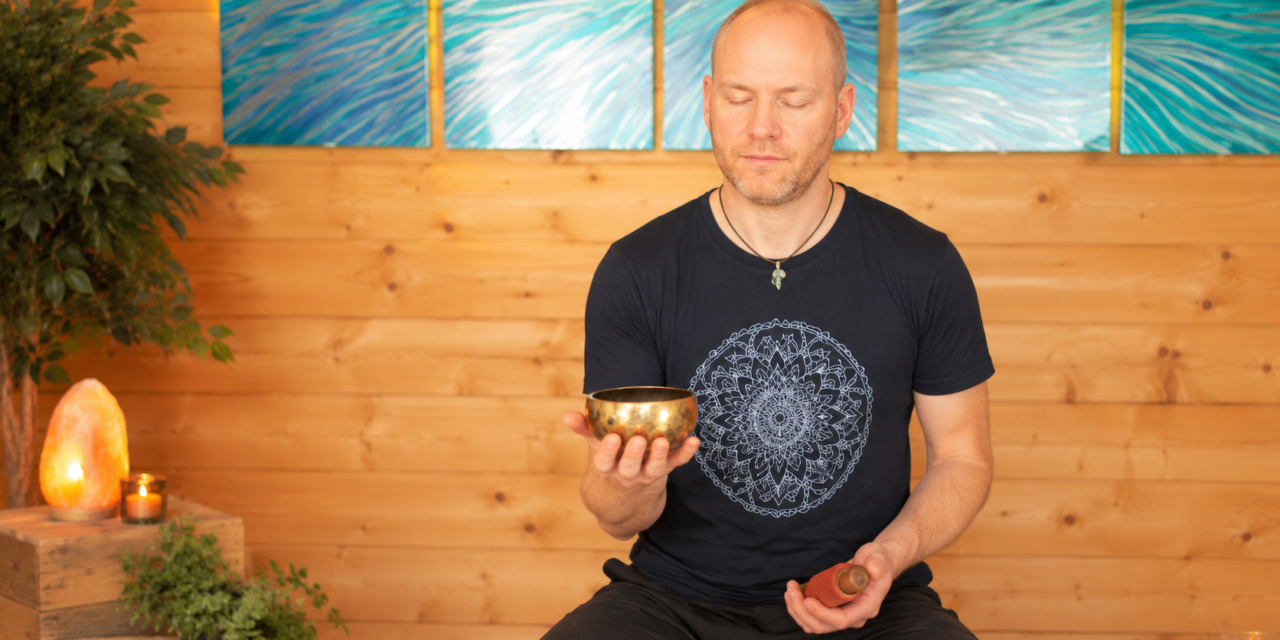
Singing bowls have a beautiful way of drawing the mind into stillness. Their rich tones, gentle vibrations and long resonant sounds can create a peaceful atmosphere for meditation, relaxation and sound healing.
Often called Tibetan singing bowls or Himalayan singing bowls, these instruments are now widely used in meditation spaces, yoga classes, sound baths, holistic therapy rooms and personal wellbeing practices. For many people, the sound of a singing bowl feels calming because it gives the mind something simple and soothing to rest upon.
In this article, I explore the benefits of singing bowls for meditation, relaxation and emotional wellbeing. I also share how they create sound, why they are often linked with Tibetan and Himalayan traditions, and how you can begin using a singing bowl in your own meditation practice.
What Is a Singing Bowl?
A singing bowl is a metal bowl that produces sound when it is gently struck or when a mallet is moved around the rim. The vibration causes the bowl to “sing,” creating a sustained tone that can continue for several seconds.
Singing bowls are often made from bronze, brass or other metal alloys. Some modern bowls are also made from crystal, although traditional-style Tibetan or Himalayan bowls are usually metal.
When played gently, a singing bowl can produce:
- A clear bell-like tone
- A deep resonant hum
- Subtle overtones
- Gentle vibration through the hand or surface
- A calming sound that slowly fades into silence
This combination of tone, vibration and silence is one reason singing bowls are so effective in meditation. The sound gives the mind a focal point, while the fading resonance naturally invites deeper listening.
For a deeper understanding of how vibration becomes sound, you may also enjoy my article: What Is Sound? The Science of Sound, Music and Healing.
Why Are They Called Tibetan Singing Bowls?
Many singing bowls are commonly known as Tibetan singing bowls, although their exact history is not completely clear. Some bowls are associated with the wider Himalayan region, including Tibet, Nepal and Northern India. Others may have developed from older metal bowls or standing bells used across parts of Asia.
Because of this, it may be more accurate to describe them as Tibetan or Himalayan singing bowls, especially when writing about their cultural background.
Whatever their exact origin, singing bowls have become deeply connected with meditation, sound healing and spiritual practice in the modern world. Their sound can feel ancient, grounding and sacred, even when used in a simple personal meditation at home.
The important thing is to approach them with respect, curiosity and awareness. A singing bowl is not just a decorative object. It is an instrument of vibration, listening and presence.
How Do Singing Bowls Create Sound?
A singing bowl creates sound through vibration.
When the bowl is struck with a mallet, the metal begins to vibrate. These vibrations move through the air as sound waves, which are then received by the ears and interpreted by the brain.
When the mallet is moved around the rim, friction causes the bowl to vibrate continuously. This creates the long “singing” tone that gives the instrument its name.
The sound may include several layers:
- The main tone
- Higher overtones
- A low humming resonance
- Subtle pulsing or beating sounds
- A fading tail of silence after the tone ends
This is why singing bowls can feel so immersive. They do not simply produce one flat sound. They create a living field of vibration that changes as you listen.
This links beautifully with the way music and sound can affect the mind and body. You can explore this further here:
The Healing Effects of Music on the Brain.
Singing Bowls and Meditation
One of the most popular ways to use a singing bowl is during meditation.
The tone of the bowl can mark the beginning of a meditation session, helping you move from everyday activity into a calmer inner space. The sound can also be used during meditation as a point of focus.
Instead of trying to force the mind to be silent, you can simply listen.
You might notice:
- The first strike of the bowl
- The vibration spreading into the room
- The changing tone as it fades
- The moment where sound becomes silence
- The stillness that remains afterwards
This can be a very gentle form of mindfulness. The bowl helps bring attention into the present moment without needing complicated techniques.
If you find silent meditation difficult, a singing bowl can make the practice feel easier because the sound gives your awareness something peaceful to follow.
Potential Benefits of Singing Bowls
Singing bowls are often used to support relaxation, meditation and emotional balance. Everyone experiences sound differently, but many people find singing bowls helpful for creating a calm and reflective state.
Some possible benefits include:
1. Supporting relaxation
The slow, resonant tone of a singing bowl can help create a peaceful environment. This may support the body and mind in shifting away from stress and into a more relaxed state.
2. Helping with meditation focus
The sound gives the mind a simple anchor. This can be especially helpful for beginners who find it difficult to sit in silence.
3. Creating a calming atmosphere
A singing bowl can quickly change the feeling of a room. The sound can make a space feel more sacred, peaceful and intentional.
4. Encouraging deeper breathing
When listening to a long, fading tone, the breath may naturally begin to slow down. This can help create a feeling of inner calm.
5. Supporting emotional release
Sound can sometimes help us connect with emotions that have been held inside the body or nervous system. A singing bowl may support this process by creating a safe and soothing atmosphere for reflection.
You may also like to read: How to Use Healing Music for Emotional Release.
6. Bringing awareness into the present moment
Because the sound changes from moment to moment, it encourages careful listening. This can help pull attention away from worry and back into the present.
7. Supporting spiritual practice
For some people, singing bowls are used as part of prayer, energy work, chakra meditation or personal spiritual rituals. The tone can help mark a transition into sacred space.
Singing Bowls, Stress and Wellbeing
Many people use singing bowls because they feel soothing. The sound can encourage stillness, and stillness is often what we need when life feels busy, emotional or overwhelming.
Some research has explored singing bowl meditation and mood. In one study, participants reported feeling less tension, anger, fatigue and low mood after a sound meditation session. More research is still needed, but these findings support what many people experience personally: sound meditation can feel deeply calming.
It is important to remember that singing bowls should not replace medical or mental health care. However, they can be a supportive wellbeing tool alongside healthy routines, rest, meditation, gentle movement and professional help where needed.
Tibetan Singing Bowls and Chakra Healing
Singing bowls are often used in chakra healing and energy meditation. In this approach, sound is used to support balance within the body’s subtle energy system.
Some practitioners use different bowls for different tones, frequencies or energetic intentions. Others simply allow the sound to move through the body intuitively.
You do not need to be an expert in chakras to benefit from a singing bowl. You can simply sit, listen and notice how the sound feels in your body.
However, if you are interested in chakra-based sound healing, singing bowls can work beautifully with:
- Root chakra grounding practices
- Heart chakra meditation
- Solar plexus confidence work
- Crown chakra spiritual connection
- Full-body energy balancing
You may enjoy this related guide:
The 7 Key Benefits of Chakra Healing Music.
How to Use a Singing Bowl for Meditation
Here is a simple way to begin.
Step 1: Create a quiet space
Find a comfortable place where you will not be disturbed. You may want to light a candle, dim the lights or sit near a peaceful object that helps you relax.
Step 2: Hold or place the bowl
You can hold the bowl gently in the palm of your hand or place it on a cushion. Try not to grip it too tightly, as this may stop the vibration.
Step 3: Strike the bowl gently
Tap the side of the bowl with the mallet. Let the sound ring out naturally.
Step 4: Listen until the sound fades
Follow the tone with your attention. Notice the sound becoming softer and softer.
Step 5: Rest in the silence
After the sound fades, pause. Notice the stillness that remains.
Step 6: Repeat slowly
You can repeat this several times. There is no need to rush. The space between each sound is just as important as the sound itself.
How to Make a Singing Bowl Sing
To create the continuous singing sound, hold the mallet against the outside rim of the bowl and slowly move it around in a circular motion.
A few tips:
- Keep your hand relaxed
- Use gentle, steady pressure
- Move slowly around the rim
- Let the sound build naturally
- Do not force the tone
- Try different speeds and angles
Some bowls sing easily. Others take more practice. Smaller bowls can sometimes be harder to play smoothly, while larger bowls may produce deeper and longer tones.
If the sound becomes scratchy or uneven, slow down and reduce pressure.
Choosing a Singing Bowl
If you are buying your first singing bowl, choose one that you genuinely enjoy listening to.
Before buying, consider:
- The tone of the bowl
- The size and weight
- Whether it feels comfortable to hold
- The quality of the mallet
- Whether it comes with a cushion
- Whether the sound feels calming to you
If possible, listen before you buy. A bowl may look beautiful, but the sound is the most important part.
You may prefer:
- A small bowl for personal meditation
- A medium bowl for general relaxation
- A larger bowl for deeper sound and stronger resonance
- A hand-hammered bowl for a more traditional look and feel
There is no perfect bowl for everyone. The right bowl is the one you feel connected to.
A Simple Singing Bowl Meditation Practice
Try this short practice:
Sit comfortably and close your eyes.
Take a slow breath in.
Gently strike the singing bowl.
As the sound rings out, listen carefully.
Let your breath soften.
When the sound fades, remain still for a few moments.
Repeat this three times.
After the final tone, sit quietly and notice how you feel.
This simple practice can be used at the start of the day, before sleep, before journaling, after work, or whenever you need a few moments of calm.
Singing Bowls and Other Healing Instruments
Singing bowls are not the only instruments used for meditation and wellbeing. Drums, gongs, chimes, tuning forks, voice and gentle music can all be used to support relaxation and inner awareness.
Each instrument has its own quality. Drums can feel grounding and rhythmic, while singing bowls often feel spacious and meditative.
If you are interested in rhythm-based sound healing, you may also enjoy:
The Health Benefits of Drumming for the Body and Mind.
Final Thoughts
Singing bowls are simple, beautiful and powerful instruments for meditation, relaxation and sound healing. Their tones can help create a peaceful atmosphere, quieten mental activity and bring awareness into the present moment.
Whether you call them Tibetan singing bowls, Himalayan singing bowls or simply singing bowls, their value lies in the experience of listening. The sound invites you to pause, breathe and reconnect with yourself.
You do not need to use a singing bowl perfectly. You only need to listen.
The more you work with the sound, the more you may notice the subtle space it creates within you — a space of calm, presence and inner harmony.
Continue Exploring Sound Healing and Meditation
If you enjoyed learning about singing bowls, you may also like these related guides from Music Energetics:
- What Is Sound? The Science of Sound, Music and Healing – explore how vibration, frequency and sound waves work.
- The Healing Effects of Music on the Brain – discover how music and sound can influence mood, relaxation and the nervous system.
- Healing Music for Emotional Release – learn how gentle music and sound can support emotional balance and inner release.
- The Health Benefits of Drumming for the Body and Mind – explore another powerful sound healing practice based on rhythm and grounding.
- The 7 Key Benefits of Chakra Healing Music – discover how music can be used to support energy balance and meditation.
Frequently asked questions
Are singing bowls good for meditation?
Yes, singing bowls can be very helpful for meditation because their sound gives the mind a gentle point of focus. The tone can help create a calm space and support a more peaceful meditative state.
Are Tibetan singing bowls really from Tibet?
The phrase “Tibetan singing bowl” is widely used, but the exact history is debated. Many bowls are also associated with the wider Himalayan region, including Nepal, Northern India and Tibet. For this reason, some people prefer the phrase “Tibetan or Himalayan singing bowls.”
Can singing bowls reduce stress?
Singing bowls may help create a calming environment that supports relaxation and stress relief. They should not be seen as a medical treatment, but many people find them helpful as part of meditation, rest and wellbeing practices.
How do you use a singing bowl?
You can gently strike the bowl and listen as the sound fades, or move a mallet around the rim to create a continuous singing tone. The key is to play slowly, listen deeply and allow the sound to support relaxation.
What is the best singing bowl for beginners?
A medium-sized bowl is often a good choice for beginners because it is usually easier to hold and play than a very small bowl, while still producing a rich and calming tone.
Join the Conversation
Singing bowls can affect each person in a slightly different way. Some people feel deeply relaxed, while others notice a sense of emotional release, stillness or inner clarity.
Have you ever used a Tibetan or Himalayan singing bowl in meditation? How did the sound make you feel?
Share your experience in the comments below — I’d love to hear your thoughts.