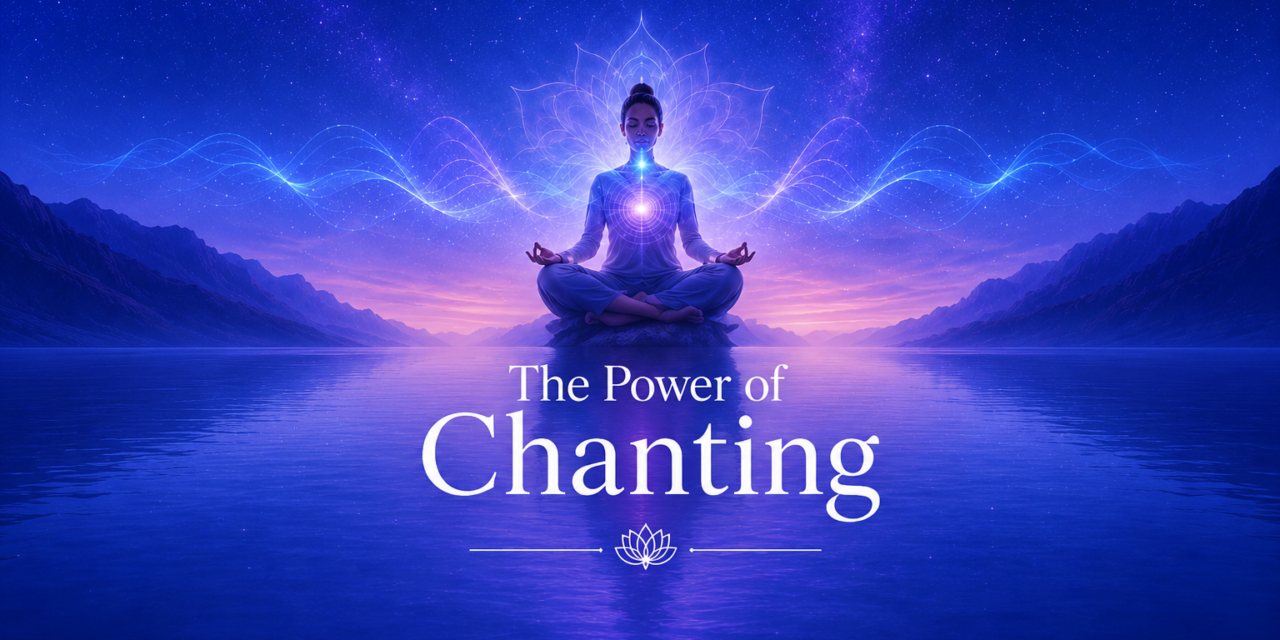
Chanting is one of the oldest and most accessible forms of sound practice. It requires no instrument, musical training or complicated equipment. The voice itself becomes the instrument.
Through the gentle repetition of a word, phrase or sound, chanting can help bring attention away from racing thoughts and back towards the breath, body and present moment. The rhythm of the voice may create a feeling of stability, while the vibration can be experienced physically through the chest, throat, face and head.
Chanting may be used as part of meditation, prayer, spiritual practice, emotional expression or sound healing. Some people chant traditional mantras, while others prefer simple vowel sounds, affirmations or their own meaningful words.
Whatever form it takes, the power of chanting lies in the combination of sound, breath, vibration, rhythm, repetition and intention.
What Is Chanting?
Chanting is the rhythmic repetition of a sound, word or phrase. It can be spoken, whispered, sung or repeated silently within the mind.
Unlike an ordinary song, chanting usually uses a limited number of notes and a simple repeated pattern. This makes it easier to participate without worrying about musical ability or vocal technique.
Common forms of chanting include:
- Traditional mantras
- Sacred names or prayers
- The sound OM or AUM
- Chakra bija mantras
- Vocal toning with vowels
- Humming
- Repeated affirmations
- Group call-and-response chanting
- Silent mantra repetition
Some chants belong to particular spiritual and cultural traditions. When using them, it is helpful to learn about their meaning, pronunciation and origins so they can be approached respectfully.
Other forms, such as humming or sustaining an open vowel sound, can be practised without following a particular belief system.
Why the Human Voice Can Feel So Powerful
We usually think of the voice as a way of communicating with other people. However, when we chant, the voice also becomes something we experience inside the body.
A sustained sound creates vibration around the throat, chest, mouth, face and skull. Depending on the pitch and vowel being used, the vibration may feel stronger in different areas.
You might notice:
- A gentle buzzing around the lips or nose
- Resonance within the chest
- Warmth or openness around the throat
- A tingling sensation around the face
- A stronger awareness of the breath
- A feeling of being more present within the body
This physical experience can give the mind something immediate to focus upon. Instead of trying to force thoughts to stop, you can listen to the sound, feel the vibration and follow each breath.
Chanting therefore becomes a form of active meditation.
The Connection Between Chanting and Breath
Every audible chant is carried by the exhalation.
When a sound is sustained comfortably, the out-breath often becomes slower and more controlled. The next inhalation then arrives naturally before another repetition begins.
This creates a gentle cycle:
Breathe in. Chant. Pause. Breathe in again.
The rhythm does not need to be forced. It should feel easy, comfortable and natural.
As breathing becomes steadier, the body may begin to feel less tense. The repeated pattern can also provide a reassuring point of focus when the mind feels busy or distracted.
This is one reason chanting can work beautifully alongside healing music, meditation and other mindful breathing practices.
How Chanting May Support Relaxation
Repetitive sound can create a sense of predictability. The mind does not have to keep processing new words, melodies or instructions. It can gradually settle into the rhythm.
During a chanting practice, you may notice:
- Your breathing becoming slower
- Your shoulders beginning to relax
- Less attention being given to outside distractions
- Thoughts feeling less dominant
- A growing sense of stillness
- Greater awareness of the body
Chanting should not be presented as a cure for stress, anxiety or any medical condition. However, it may provide a supportive relaxation practice when used alongside appropriate professional care.
Research reviews have found promising evidence that mantra-based meditation may help reduce stress and psychological distress, although results vary and some studies have methodological limitations. A small study of five minutes of OM chanting also observed immediate changes associated with increased parasympathetic activity and relaxation. These findings are encouraging, but they do not mean that chanting will affect everyone in the same way.
Chanting as a Meditation Practice
Many people find silent meditation difficult because the mind continues to produce thoughts, memories and worries.
Chanting gives the mind a gentle task.
Rather than trying to create complete silence, you repeatedly return your attention to:
- The sound of the voice
- The meaning of the chant
- The movement of the breath
- The rhythm of repetition
- The vibration within the body
- The intention behind the practice
When your attention wanders, there is no need to criticise yourself. Simply return to the next repetition.
Over time, the repeated sound can become an anchor that brings you back to the present moment.
Mantram repetition has also been studied as a portable mindfulness practice that can be used during everyday situations, not only during formal meditation. Reviews of this approach suggest it may support stress management, mindfulness and resilience, although it should remain complementary to established healthcare when someone is experiencing significant distress.
Chanting and Emotional Expression
The voice is closely connected with emotion.
We sigh when we are tired, cry when we are overwhelmed, laugh when we feel joy and sometimes lose our voice when we are afraid to express ourselves.
Chanting offers a structured and gentle way to use the voice without needing to explain everything in words.
A person may experience:
- Relief after making sound
- Greater emotional openness
- A feeling of release in the throat or chest
- Increased confidence in using the voice
- A sense of being heard, even when practising alone
- Unexpected emotions rising to the surface
It is important not to force an emotional release. The purpose is not to make something dramatic happen. The chant simply creates a safe focus where feelings may be noticed and allowed to move naturally.
You can explore this further in my article about using healing music for emotional release.
Chanting and the Throat Chakra
Within the chakra system, the throat chakra is associated with communication, truth, expression, listening and the ability to use the voice.
It is traditionally known as Vishuddha and is often connected with the colour blue.
Chanting may be used as a throat chakra practice because the sound is created directly within the throat and vocal system. The vibrations can help bring attention to this area while encouraging conscious expression.
The bija, or seed mantra, traditionally associated with the throat chakra is:
HAM
This is commonly pronounced with a long vowel sound, followed by a soft closing hum.
You might practise it slowly:
Haaaaaammmmm
Allow the sound to remain gentle. There is no need to sing loudly or reach a particular note.
You can also listen to my Throat Chakra Meditation Music Video, which explores sound and the HAM mantra as part of a chakra-focused practice.
OM Chanting and the Crown Chakra
OM, sometimes written as AUM, is one of the most widely recognised meditation sounds.
Within several Indian spiritual traditions, OM carries deep sacred and philosophical meaning. It should therefore be approached as more than simply a wellbeing sound or relaxation technique.
In chakra practice, OM is commonly associated with the crown chakra and sometimes with the third eye.
The sound may be divided into three parts:
Aaa – Uuu – Mmm
You can begin with an open sound, allow it to move through the mouth and finish with a comfortable hum.
As the lips close, notice the vibration around the face and head.
OM chanting has been examined in small physiological and brain-imaging studies. Some findings suggest that it may influence brain activity and autonomic regulation, but the evidence remains limited and should not be used to claim that OM directly treats illness.
My Crown Chakra Meditation Music Video includes my own vocal OM sounds alongside healing music.
Bija Mantras for the Seven Chakras
Bija mantras are short seed sounds traditionally connected with different energy centres.
A commonly used sequence is:
- Root chakra: LAM
- Sacral chakra: VAM
- Solar plexus chakra: RAM
- Heart chakra: YAM
- Throat chakra: HAM
- Third eye chakra: OM
- Crown chakra: silence or OM
These associations come from spiritual and yogic traditions rather than established medical science.
You can focus on one chakra or gently move through the entire sequence. As you chant, bring your awareness to the corresponding area of the body without straining to create a particular sensation.
For a wider introduction to the energy system, visit my Complete Guide to Chakra Healing with Music.
You Do Not Need a “Good” Singing Voice
One of the most important things to understand about chanting is that it is not a performance.
You do not need to:
- Sing perfectly in tune
- Have a powerful voice
- Know how to read music
- Sound like another person
- Chant loudly
- Perform in front of anyone
A soft, natural sound is enough.
The purpose is to feel the sound and remain present with it. Even quiet humming can become a meaningful practice.
Some people initially feel self-conscious about making sound. Practising alone, keeping the volume low or beginning with humming can help the voice feel safer and more natural.
Group Chanting and Human Connection
Chanting can be practised alone, but it can also create a strong sense of connection within a group.
When people repeat the same sounds together, their voices combine into a shared rhythm. Individual voices become part of a larger sound, which may create feelings of belonging, unity and collective intention.
Group chanting is found within many religious, spiritual and community traditions. The meanings and methods vary widely, but repetition and shared sound often play an important role in prayer, ceremony, remembrance and connection.
For some people, this shared experience feels energising and uplifting. For others, chanting alone feels more private and peaceful. Both approaches can be valuable.
The wider use of voice, rhythm and music throughout healing traditions is explored in The History of Music as Healing.
A Simple Five-Minute Chanting Practice
You can use the following practice with OM, a bija mantra, a simple vowel or another meaningful word.
1. Find a comfortable position
Sit upright without becoming rigid. Relax your shoulders and allow your hands to rest comfortably.
2. Set a gentle intention
Your intention could be:
- I welcome calm.
- I allow myself to be present.
- I open my voice with kindness.
- I return to inner balance.
3. Take three natural breaths
Avoid taking excessively deep breaths. Let the breathing remain comfortable.
4. Begin your chosen sound
Chant at a pitch that feels easy for your voice. Keep the volume gentle.
5. Feel the vibration
Notice where you experience the sound within your body.
6. Allow a moment of silence
After each repetition, pause briefly before inhaling again.
7. Continue for five minutes
There is no need to count every chant. Let a natural rhythm develop.
8. Rest quietly
When you finish, sit in silence for one or two minutes. Notice your breathing, emotions and overall state.
Combining Chanting With Healing Music
Chanting can be especially effective when combined with simple, spacious music.
A sustained drone, gentle piano chord, singing bowl or ambient background can provide a stable foundation for the voice.
Music can help by:
- Creating a calm atmosphere
- Providing a comfortable pitch
- Supporting a steady rhythm
- Making the voice feel less exposed
- Deepening the meditative experience
- Encouraging a regular practice
Avoid music that is too busy or changes chords rapidly. The voice needs space.
You might begin by listening to music for several minutes, add gentle chanting and then finish by returning to silent listening.
This can become part of a daily healing music ritual.
Creating Your Own Personal Chant
A chant does not always have to come from an established spiritual tradition.
You can repeat a simple word or phrase that reflects what you need in the present moment.
Examples include:
- I am safe.
- I am supported.
- I welcome peace.
- I trust my inner voice.
- I release and let go.
- I am worthy of love.
- I return to balance.
Try using only a few words. A short phrase is easier to repeat and allows you to connect more deeply with its meaning.
You can speak it rhythmically, sing it on one note or alternate between two comfortable notes.
The intention is more important than creating a complicated melody.
When Chanting Does Not Feel Comfortable
Chanting should never feel painful, forced or overwhelming.
Stop or rest if you experience:
- Throat pain
- Vocal strain
- Dizziness
- Breathlessness
- Panic
- Emotional overwhelm
- Head or chest discomfort
Use a comfortable pitch, moderate volume and natural breath. Do not try to make one exhalation last longer than feels safe.
People with persistent voice, breathing or throat problems should seek appropriate medical guidance before beginning an intensive vocal practice.
Chanting may support relaxation and meditation, but it should not replace medical care, psychological therapy or treatment from a qualified professional.
Final Thoughts
The power of chanting comes from something deeply natural: the meeting of breath and voice.
Through repetition, the mind is given a steady focus. Through vibration, awareness returns to the body. Through intention, an ordinary sound can become a meaningful personal practice.
You do not need to chant perfectly or follow a complicated routine.
Begin with one comfortable sound.
Listen to your voice without judgement. Feel the vibration. Follow your breathing and allow a few minutes of repetition to become a space of calm, expression and inner connection.
Your own voice may be one of the most personal sound-healing instruments available to you.
Frequently Asked Questions About Chanting
What is the purpose of chanting?
Chanting uses repeated sounds, words or phrases to support meditation, prayer, concentration, emotional expression or spiritual practice. The repetition can give the mind a stable focus while encouraging awareness of the voice, breath and body.
Can chanting help reduce stress?
Chanting may support relaxation by encouraging rhythmic breathing, repetition and focused attention. Research into mantra meditation has found promising results for stress reduction, but chanting should not be considered a cure or replacement for professional treatment.
How long should I chant for?
Beginners can start with three to five minutes. You can gradually extend the practice to 10, 15 or 20 minutes when it feels comfortable.
Do I need to chant out loud?
No. A mantra can be spoken, whispered, hummed or repeated silently. Audible chanting provides more physical vibration, while silent repetition may be more suitable in public places or quiet environments.
Which mantra is best for beginners?
OM is widely used, although it has sacred cultural and spiritual significance. Humming, an open “ah” sound or a simple phrase such as “I welcome peace” can also provide an accessible starting point.
Can anyone practise chanting?
Most people can experiment with gentle chanting. The sound should remain comfortable and should never cause vocal strain, dizziness or breathlessness. Anyone with significant voice or breathing difficulties should seek professional advice.
Is chanting religious?
Chanting appears within many religious and spiritual traditions, but not every chanting practice is religious. Vocal toning, humming and repeating a personal affirmation can also be used as secular meditation or relaxation practices.
Can chanting balance the chakras?
Chanting is used within some spiritual traditions as a way of focusing awareness on the chakras through sound, vibration and intention. Chakra balancing is a spiritual or energetic practice rather than a medically established treatment.
Continue Exploring Sound, Music and Meditation
You may also enjoy these related articles from Music Energetics:
Gentle Invitation to Comment
Have you ever used chanting, humming or mantras during meditation?
Which sound helps you feel most peaceful, grounded or connected?
I would love to hear about your experience in the comments below.