
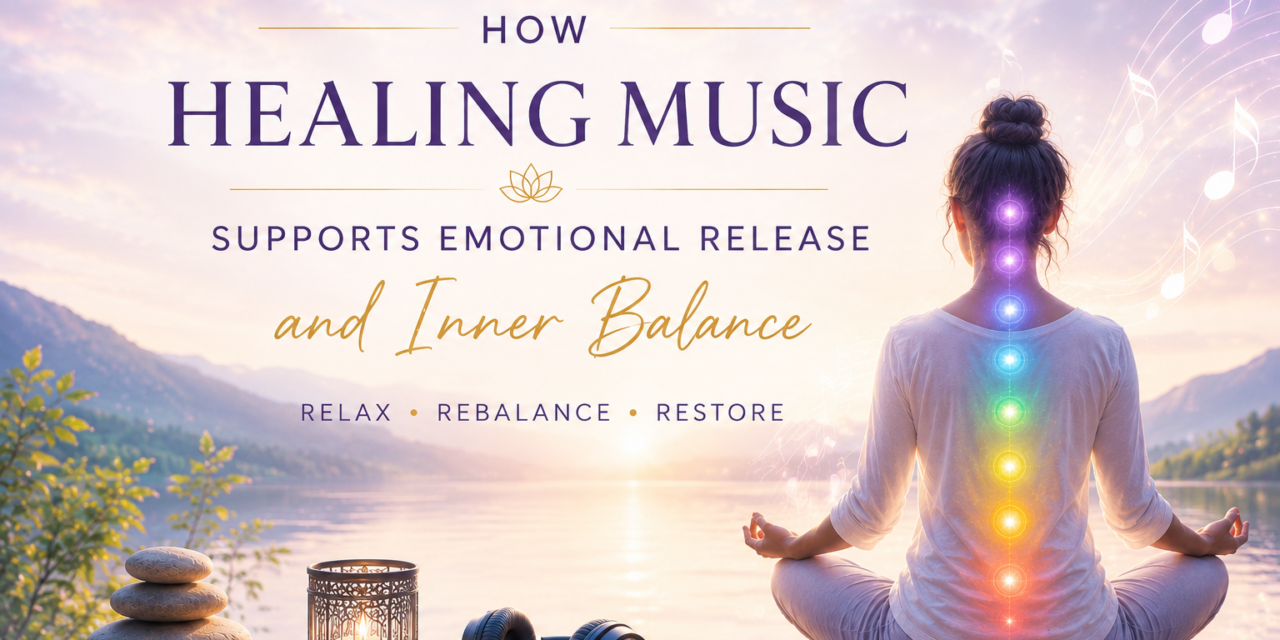
Healing music can gently calm the mind, release emotional tension, and restore inner balance through sound, meditation, and mindful listening. In this article, we explore how music affects emotional wellbeing and how healing frequencies may support relaxation and emotional release.
Paul Darren Grout.
Listen whilst you read
You may wish to listen to this calming healing meditation music whilst reading this article to deepen relaxation and emotional reflection.
Introduction
There are moments in life when emotions become difficult to process.
Stress, grief, anxiety, emotional exhaustion, and even unspoken feelings can quietly accumulate within the body and mind over time. Many people attempt to suppress these emotions in order to continue functioning in daily life, yet unresolved emotional energy often continues to affect our wellbeing beneath the surface.
This is one reason why healing music can feel so powerful.
Certain sounds, rhythms, melodies, and frequencies have the ability to gently guide the mind and body into a calmer and more balanced state. Healing music creates space for emotional release, self-reflection, relaxation, and inner restoration.
In this article, I would like to explore how healing music supports emotional wellbeing, why music affects us so deeply, and how you can use music intentionally within your own meditation and self-care practice.
Why Music Affects Human Emotions So Deeply
Music has always been closely connected with human emotion.
Across all cultures and throughout history, music has been used during ceremonies, healing rituals, spiritual practices, celebrations, grieving processes, and meditation. Unlike ordinary conversation, music communicates directly through vibration, rhythm, tone, and feeling.
Modern neuroscience has also shown that music stimulates many areas of the brain associated with:
- Emotion
- Memory
- Relaxation
- Motivation
- Creativity
- Nervous system regulation
Listening to calming music may help reduce stress hormones whilst encouraging the production of positive neurochemicals associated with relaxation and emotional comfort. Research also suggests that soothing music may help slow breathing patterns, reduce tension, and support emotional regulation.
This may explain why certain pieces of music can instantly bring feelings of peace, nostalgia, sadness, inspiration, or emotional release.
Healing Music and Emotional Energy
Emotions are not purely mental experiences.
Emotional states also affect the body physically and energetically. For example, prolonged stress may create muscular tension, fatigue, shallow breathing, digestive discomfort, or difficulty sleeping.
Many holistic healing traditions believe emotional experiences also influence the body’s energetic system.
Healing music can help create a gentle bridge between the conscious mind, emotional body, and deeper inner awareness.
Slow meditative music often encourages:
- Deep breathing
- Nervous system relaxation
- Mental stillness
- Emotional reflection
- Improved mindfulness
- Inner grounding
As the body begins to relax, emotions that were previously suppressed may naturally rise into awareness to be acknowledged and released.
This is why some people experience tears, emotional clarity, tingling sensations, warmth, or a deep sense of peace whilst listening to healing music or during meditation.
The Relationship Between Music and Brainwave States
Healing music may also influence the brain through a process known as entrainment.
Entrainment refers to the tendency for the brain and body to synchronise with external rhythmic patterns. Calming music with slow rhythms and soothing tones may encourage the brain to move towards slower brainwave states associated with relaxation and meditation.
These relaxed states are often linked with:
- Meditation
- Creativity
- Visualisation
- Reduced mental chatter
- Emotional processing
- Improved sleep quality
This is one reason why meditation music is commonly used for stress reduction, mindfulness practices, yoga, and emotional healing sessions.
How to Use Healing Music for Emotional Release
Healing music becomes more powerful when used intentionally.
Here is a simple process you can try at home:
1. Create a Quiet Space
Choose a peaceful environment where you are unlikely to be interrupted.
Dim lighting, candles, nature sounds, or comfortable surroundings can help prepare the mind and body to relax.
2. Use Headphones if Possible
Headphones often allow you to experience the depth and subtle details of healing music more clearly.
This can help improve focus and immersion within the meditation process.
3. Focus on Your Breathing
Breathe slowly and deeply into the stomach.
Allow your breathing to become smooth and natural whilst listening to the music.
Try to release tension from the shoulders, jaw, and chest.
4. Observe Your Emotions Without Judgement
If emotions arise, simply allow yourself to observe them with compassion rather than resisting them.
Sometimes emotional healing begins simply by allowing ourselves to fully feel.
5. Finish with Stillness and Reflection
After the music ends, remain still for a few moments.
Notice how your mind and body feel compared to before the session.
You may find it helpful to journal any thoughts, emotions, or insights that surfaced during the experience.
Healing Through Sound, Nature, and Stillness
In my own work creating meditation music, I often combine soft piano, ambient textures, nature sounds, and spacious melodic arrangements to support emotional calm and energetic balance.
Nature itself carries healing rhythms.
Flowing water, rainfall, birdsong, wind, and natural harmonic soundscapes can all help reconnect us with a deeper sense of peace and grounding.
When combined with mindful breathing and meditation, healing music can become a powerful self-care practice for restoring inner balance within a busy and emotionally demanding world.
Frequently Asked Questions About Healing Music
Can Healing Music Reduce Stress?
Healing music may help reduce stress by encouraging the mind and body to enter a calmer and more relaxed state. Slow rhythms, gentle melodies, ambient sounds, and soothing frequencies can help slow breathing, reduce mental overstimulation, and support nervous system relaxation.
Many people use healing music during meditation, mindfulness practices, sleep routines, yoga, or periods of emotional stress because calming sounds may help ease feelings of anxiety and tension. Research has also suggested that relaxing music may help lower stress hormones and promote emotional wellbeing.
Why Does Music Trigger Emotions?
Music can trigger emotions because it activates several areas of the brain connected with memory, emotion, and sensory processing. Certain melodies, harmonies, rhythms, and tones can create emotional associations linked to past experiences, feelings, and states of mind.
For example, calming music may create feelings of peace and comfort, whilst dramatic or energetic music may create excitement or motivation. Music also communicates beyond words through vibration and emotional expression, which is why it often affects people deeply on both a conscious and subconscious level.
What Frequencies Are Used in Meditation Music?
Meditation music may include a variety of sound frequencies designed to support relaxation, mindfulness, and emotional balance. Some creators use soft ambient tones, binaural beats, nature sounds, singing bowls, tuning forks, or specific frequency ranges commonly associated with meditation and healing practices.
Popular meditation frequencies often include:
- 432 Hz
- 528 Hz
- Alpha brainwave frequencies
- Theta relaxation frequencies
Different frequencies are believed by some practitioners to support relaxation, emotional healing, focus, or deeper meditative states. However, personal experience can vary, and many people simply respond to whichever sounds help them feel calm and grounded.
Does Calming Music Affect the Brain?
Yes, calming music may influence brain activity and emotional state. Studies suggest that relaxing music can stimulate areas of the brain connected with emotion, memory, relaxation, and attention.
Slow and soothing music may also help encourage slower brainwave activity associated with meditation and restful states. This process is sometimes referred to as brainwave entrainment, where the brain begins to synchronise with external rhythmic patterns.
As a result, calming music may help:
- Reduce stress and anxiety
- Improve focus and mindfulness
- Support better sleep
- Encourage emotional relaxation
- Create a sense of inner calm
This is one reason why meditation music and sound healing practices are widely used for relaxation and emotional wellbeing.
Final Thoughts
Healing music is not simply entertainment.
It can become a therapeutic tool for emotional wellbeing, relaxation, mindfulness, and self-discovery.
Even dedicating a few minutes each day to listening consciously may help calm the nervous system, clear mental overwhelm, and reconnect you with a greater sense of inner peace.
Music has the ability to reach places within us that words alone often cannot.
And sometimes, within the stillness of sound, healing begins.
Share Your Experience
Has healing music or meditation helped you through stress, anxiety, or emotional healing? Feel free to share your experiences in the comments below.