
There is something quite special about using our own voice to create sound.
We often think of relaxation music as something we listen to, whether it is a gentle piano piece, a singing bowl or the sounds of nature. But our voices can also become part of the experience.
A simple hum, held comfortably for a few seconds, can create a feeling of vibration and stillness. Repeating a sound or mantra can give the mind something to focus on, particularly when thoughts are busy or difficult to settle.
I regularly use chanting as part of my own meditation and wellbeing practice. I also incorporate my recorded chants into some of my original compositions here on Music Energetics.
There is growing scientific interest in what happens when we hum or chant. Researchers are exploring the relationship between vocal sound, breathing, brain activity and the nervous system.
So what do we actually know, and how might humming and chanting become part of an everyday relaxation practice?
Why Humming Can Feel Calming
Humming is one of the simplest sounds we can make.
Unlike singing a melody, it does not require musical ability or even a particular note. We simply allow the voice to produce a gentle sound, usually with the lips closed.
As we hum, we naturally extend the out-breath. We may also notice a vibration around the lips, nose, face or chest.
These sensations give us something immediate to focus on.
Rather than trying to stop our thoughts, we can bring our attention towards the sound and how it feels.
For some people, this makes humming an accessible introduction to meditation.
The Relationship Between Humming and Breathing
One reason humming may feel relaxing is that it changes the way we breathe.
A preliminary study published in February 2026 examined humming breathing in 24 healthy adults.
Researchers observed slower, more stable breathing patterns, with breathing rates approaching approximately six breaths per minute. Heart-rate variability also tended to increase under regulated breathing conditions.
Interestingly, the researchers did not find significant differences between ordinary humming and a modified humming condition involving auditory occlusion.
This suggests that the slower breathing pattern may be an important part of the response, rather than vocal vibration alone.
The study was small, so it would be premature to conclude that humming produces lasting improvements in nervous-system health. However, it provides an interesting starting point for understanding why such a simple practice can feel calming.
What Happens in the Brain During Chanting?
Chanting adds another dimension to vocal sound.
Rather than simply humming, we may repeat a word, phrase, vowel or traditional mantra.
Some chanting practices have a spiritual or religious background, while others are used primarily for meditation or relaxation.
Researchers have begun studying these practices using brain imaging and electrical recordings of brain activity.
A systematic review published in November 2025 examined 24 neuroimaging studies involving chanting, mantras and repetitive prayer.
The researchers reported changes in brain networks associated with attention and emotional regulation. Some studies also found reduced activity in regions involved in self-referential thinking, alongside changes in brainwave patterns.
These findings suggest that chanting involves more than simply producing a repeated sound. It also engages the brain’s systems for attention and awareness.
However, changes in brain activity do not automatically demonstrate a therapeutic benefit. The studies varied in design and size, and researchers are still working to understand which effects are specific to chanting.
For a wider exploration of this fascinating subject, you may enjoy my article The Healing Effects of Music on the Brain.
Chanting and the Nervous System
Our nervous system is continually responding to the world around us.
When we feel under pressure, the body may become more alert. Our breathing can become quicker, our muscles may tense, and it can feel difficult to settle.
Relaxation involves more than simply telling ourselves to calm down.
Breathing, movement, attention and our surroundings can all influence how we feel.
Slow breathing is one of the better-studied ways of influencing autonomic regulation. Humming and chanting can naturally encourage a longer, more controlled exhalation.
That does not mean they directly stimulate the vagus nerve in a proven therapeutic way, as some online claims suggest.
The evidence is more nuanced.
What we can reasonably say is that vocal practices combine sound, breathing and focused attention, all of which may contribute to a sense of relaxation.
You can explore the wider relationship between sound and relaxation in my guide to sound healing, music and vibration.
What About Heart-Rate Variability?
Heart-rate variability, often shortened to HRV, describes variation in the time between heartbeats.
It is frequently studied in research into stress and autonomic regulation.
Certain breathing patterns can influence HRV during practice. However, a higher reading at one moment does not necessarily mean somebody has permanently improved their nervous-system health.
This distinction matters because wellbeing practices are sometimes presented with stronger claims than the evidence supports.
I think we can appreciate the calming experience of chanting without needing to turn it into a medical treatment.
The Difference Between Humming, Chanting and Mantras
Although these practices overlap, they are not quite the same.
Humming
Humming involves producing a sustained sound, usually with the lips closed.
It can be practised without words or any particular musical structure.
Chanting
Chanting involves repeating vocal sounds, syllables, words or phrases.
It may be melodic or spoken rhythmically, and can be practised alone or with others.
Mantras
A mantra is a sound, word or phrase used repeatedly as part of a contemplative practice.
Some mantras belong to longstanding spiritual traditions and carry particular meanings within those traditions.
Others may use simple vowel sounds or personally meaningful phrases.
Each approach can provide a slightly different experience, and there is no need to use all three.
If you would like to explore chanting in more depth, including its connection with meditation and emotional expression, visit my article The Power of Chanting: How the Voice Can Support Calm, Focus and Inner Balance.
Chakra Chanting and Seed Sounds
Within traditional chakra practices, certain syllables are associated with particular energy centres.
These are sometimes called bija or seed mantras.
For example, the sound HAM is traditionally associated with the throat chakra.
I find these vocal sounds interesting from both a musical and meditative perspective.
When repeated slowly, they can become almost musical in themselves. A single sound can be sustained, layered or combined with gentle instrumental music.
From a scientific perspective, however, we should distinguish between traditional chakra teachings and established physiological evidence.
There is not sufficient clinical evidence to say that chanting a particular syllable activates or heals a specific chakra as a measurable biological structure.
That does not prevent people from finding personal meaning, relaxation or creative inspiration through the practice.
For more information about the seven chakras and their relationship with sound, visit my Complete Guide to Chakra Healing with Music.
A Simple Five-Minute Humming Practice
You do not need any special equipment, musical training or complicated preparation.
Find somewhere comfortable where you are unlikely to be interrupted.
1. First minute — settle
Sit comfortably, relax your shoulders and allow your breathing to find a natural rhythm.
2. Second minute — introduce the sound
Breathe in gently and hum softly as you breathe out.
Choose a comfortable pitch and stop before you run out of breath.
3. Third minute — notice the vibration
Pay attention to the sensation of the sound around your face, lips or chest without trying to force it.
4. Fourth minute — add space
Allow a brief pause between each hum.
Notice the contrast between sound and silence.
5. Fifth minute — rest
Stop humming and sit quietly for a moment.
Notice how you feel.
There is no need to achieve a particular breathing rate or produce a perfect sound.
If you feel dizzy, uncomfortable or short of breath, stop and return to normal breathing. Avoid straining your voice.
The aim is simply to create a few minutes of comfortable attention and sound.
You might also enjoy my original 5-Minute Meditation Music — The Heart of the Rose, which combines gentle piano music, nature sounds and visual meditation.
My Personal Experience with Chanting
Chanting has become an important part of my own wellbeing, and it’s something I practise regularly.
For me, it’s much more than simply making a sound. I find chanting helps me feel grounded, particularly when I need to process emotions or find a little peace during a busy or challenging day.
I also find it deeply relaxing and therapeutic. The combination of breathing, sound and repetition helps me slow down, quieten my thoughts and become more present in the moment.
Over time, chanting has become a natural part of my meditation practice. I find that focusing on the sound of my own voice encourages me to breathe more slowly and deeply, helping me settle into a calmer state of mind.
As a composer, I’ve also incorporated my own recorded chants into some of the original musical compositions featured here on Music Energetics. I particularly enjoy combining vocal sounds with piano, allowing the music and chanting to develop together.
There’s something very personal about using my own voice in this way. It adds another layer of expression to the music, often reflecting emotions that aren’t always easy to put into words.
I don’t believe there’s one particular way that everyone should experience chanting. What works for me may be different for someone else. But through my own practice, I’ve discovered how valuable something so simple can be.
It’s one of the reasons I continue to explore the relationship between music, sound, meditation and emotional wellbeing through Music Energetics.
Music can also provide a gentle space for acknowledging difficult feelings. I explore this further in How to Use Healing Music for Emotional Release.
— Paul Darren Grout, Music Energetics
Combining Chanting with Relaxation Music
This is an area I particularly enjoy exploring as a composer.
A gentle piano piece can provide a beautiful foundation for vocal sounds.
Rather than singing a conventional melody, the voice can become part of the atmosphere.
A sustained note might blend into a piano chord. A repeated mantra can create a gentle rhythmic pattern. Layers of the same voice can gradually build a sense of depth and space.
I often prefer to begin with the music itself and allow the vocal elements to develop naturally afterwards.
There is something rewarding about creating sound without having to follow a fixed structure.
It becomes a combination of improvisation, listening and expression.
And although research into the effects of chanting is still developing, the personal value of creative music-making is also worth recognising.
A July 2026 systematic review of music-making and wellbeing found encouraging outcomes in some areas, particularly social wellbeing through group singing, while also highlighting mixed results and important gaps in the evidence.
We do not need to assume every musical experience produces the same result.
Sometimes the value is simply in having the freedom to create.
You can explore more of my original compositions in the Music Energetics Healing Music Videos collection.
Do You Need to Chant Out Loud?
Not necessarily.
Some people prefer to listen to recorded chanting, while others enjoy participating themselves.
Listening can offer a gentle point of focus without requiring any vocal effort.
Active chanting adds the physical experience of breathing and producing sound.
Both can be meaningful, although we should not assume they have identical effects.
If you are new to the practice, begin with whichever feels most comfortable.
You might enjoy listening to a gentle vocal meditation before experimenting with your own voice.
Frequently Asked Questions
Is humming good for relaxation?
Humming may help some people relax, particularly because it encourages a sustained exhalation and gives attention a simple focus. Early research suggests that the breathing pattern may be important, although more studies are needed.
Does humming stimulate the vagus nerve?
Humming can influence breathing patterns and measures associated with autonomic activity. However, current evidence does not establish that vocal vibration directly stimulates the vagus nerve in a clinically meaningful way beyond the effects of breathing.
What is the difference between humming and chanting?
Humming usually involves a sustained closed-mouth sound. Chanting often involves repeated syllables, words or phrases and may follow a rhythm or melody.
Can chanting help with anxiety?
Some studies suggest that chanting may influence attention, relaxation and emotional regulation. It should not be presented as a replacement for professional treatment for anxiety disorders.
Do I need to believe in chakras to practise chanting?
No. You can explore humming or simple vocal sounds as a secular relaxation practice. Traditional chakra mantras also have cultural and spiritual meanings that are worth respecting.
How long should I hum or chant?
A few comfortable minutes is a reasonable starting point. There is no established duration that guarantees a particular wellbeing benefit.
Final Thoughts
I think one of the most appealing things about humming and chanting is their simplicity.
We do not need expensive equipment, a perfect singing voice or even a piece of music playing in the background.
Our own voice can become a source of sound, rhythm and attention.
The research is still developing, particularly when it comes to understanding the individual effects of breathing, vocal vibration and meditation.
But there is already enough to make this an interesting area to explore thoughtfully.
For me, chanting is also part of the creative process. It offers another way to bring human expression into music, sometimes through the simplest possible sounds.
Whether you use humming for a few quiet minutes or explore more traditional mantra practices, the important thing is finding an approach that feels natural and comfortable.
Sometimes one gentle sound is all we need to begin.
Join the Conversation
Have you ever tried humming or chanting as part of meditation or relaxation?
Perhaps you enjoy traditional mantras, simple vowel sounds or chanting combined with music.
I would love to hear about your experiences and whether you find it more relaxing to listen or to use your own voice.
This article is intended for general information and wellbeing. Humming and chanting are not substitutes for medical or psychological treatment.
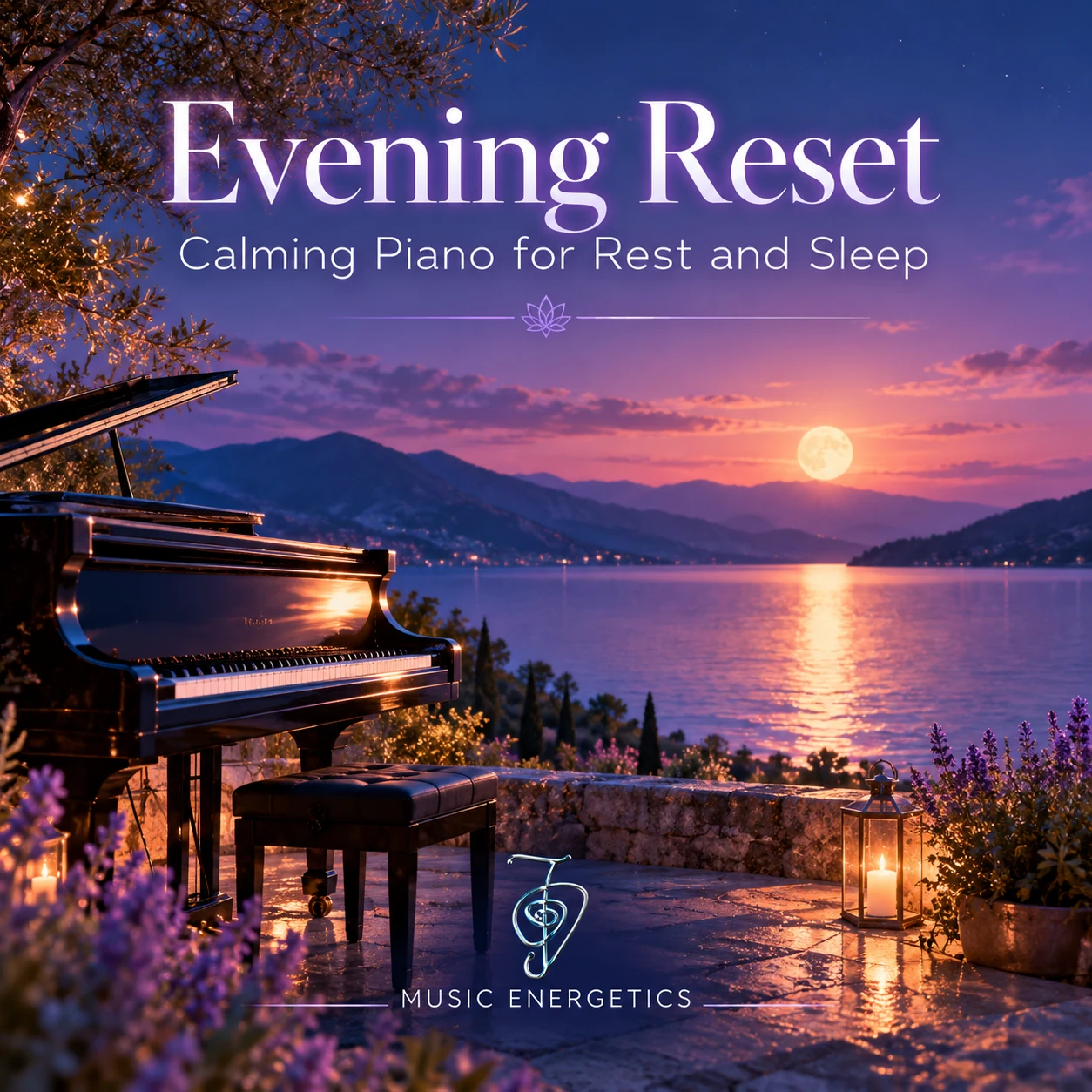
Evening Reset
Calming Piano for Rest and Sleep
Take a little time to unwind with 22 minutes of original piano music and peaceful nature sounds.
Discover five compositions thoughtfully arranged into one continuous listening experience.
£7.50 — Digital Music Collection