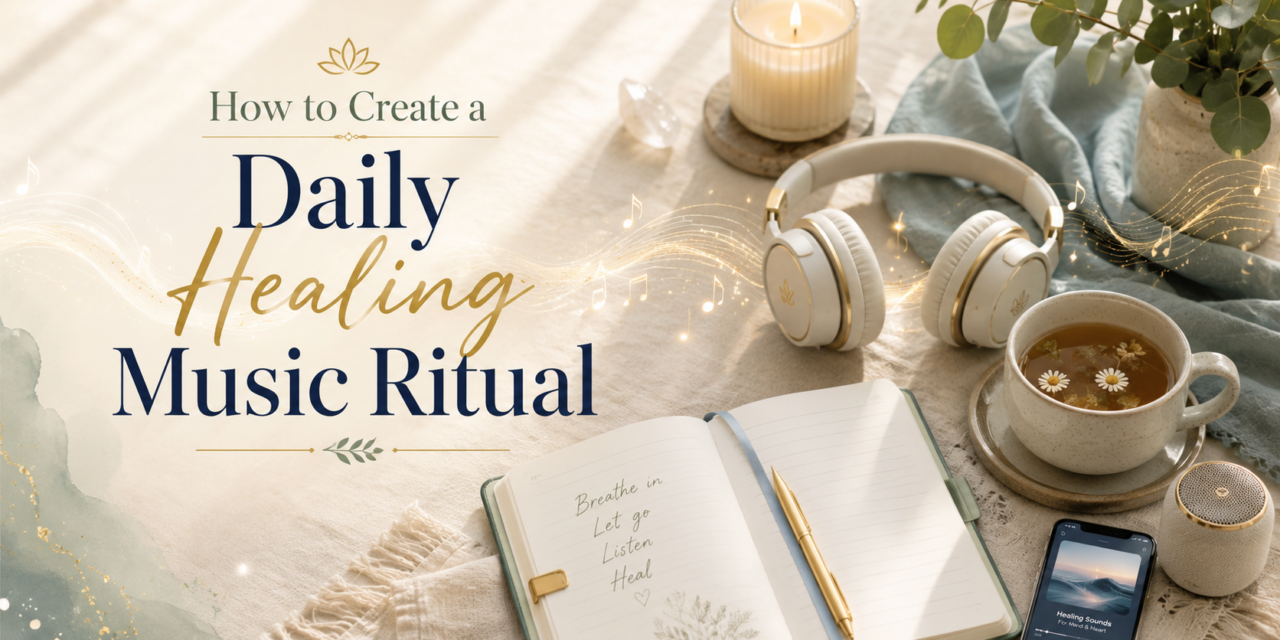
In a busy and often overwhelming world, even a few minutes of peaceful music each day can become a powerful form of self-care.
A daily healing music ritual does not need to be complicated. You do not need special equipment, advanced meditation skills, or hours of free time. All you need is a quiet moment, an open heart, and music that helps you reconnect with yourself.
Healing music can gently support relaxation, emotional release, inner balance and a deeper sense of presence. When used regularly, it can become a comforting anchor in your day — a space where you can breathe, reset and return to harmony within.
On Music Energetics, I often explore how music, sound and meditation can support the mind, body and energy field. You may also enjoy reading my article on The Healing Effects of Music on the Brain if you would like to understand more about how music can influence mood, emotion and mental focus.
What Is a Healing Music Ritual?
A healing music ritual is a simple daily practice where you use music intentionally to support your wellbeing.
Rather than playing music in the background while you are distracted, a ritual invites you to listen with awareness. You give yourself permission to slow down, breathe deeply and allow the sound to guide you into a calmer state.
This can include:
- Listening to calming piano music
- Practising meditation with sound
- Setting a positive intention
- Breathing slowly and consciously
- Journaling after listening
- Using chakra healing music
- Creating a peaceful morning or evening routine
The most important part is not how long the ritual lasts, but how present you are during the experience.
Even five minutes of deep listening can shift your energy.
Why Create a Daily Healing Music Ritual?
Many people only turn to calming music when they feel stressed, anxious or emotionally drained. While music can certainly help during difficult moments, it can be even more powerful when used consistently.
A daily ritual helps you create a rhythm of peace in your life.
Over time, your mind and body may begin to associate the music with relaxation, safety and inner stillness. This can make it easier to settle your thoughts, release tension and reconnect with your natural sense of balance.
A daily healing music ritual may help you:
- Feel calmer in the morning
- Release stress after work
- Sleep more peacefully
- Process emotions gently
- Improve meditation practice
- Feel more grounded
- Reconnect with your heart
- Create space for self-reflection
If you are experiencing anxiety or overwhelm, you may also find support in my post Guided Meditation for Anxiety Relief: Using Music to Calm the Mind and Body.
Step 1: Choose the Right Time of Day
The first step is to choose a time that feels natural and realistic.
You do not need to force yourself into a long routine. It is better to begin with a small practice that you can repeat consistently.
Good times for a healing music ritual include:
Morning:
To begin the day with calm, clarity and positive intention.
Afternoon:
To reset your energy if you feel tired, scattered or emotionally overloaded.
Evening:
To release the day and prepare your body and mind for rest.
Before sleep:
To quiet the nervous system and enter a more peaceful state.
If you are new to daily rituals, start with just 5 to 10 minutes. Once the practice becomes familiar, you can extend the time if it feels right.
Step 2: Create a Peaceful Space
Your environment has a strong influence on how easily you can relax.
Choose a space where you feel comfortable and unlikely to be disturbed. This could be your bedroom, living room, meditation corner, garden room, or even a quiet place where you can sit with headphones.
You may wish to include:
- A candle
- Soft lighting
- A blanket
- Crystals
- A journal
- Incense or essential oils
- A comfortable chair or cushion
The space does not need to be perfect. What matters most is that it feels welcoming and peaceful to you.
Over time, this space can become associated with calm and healing.
Step 3: Set an Intention
Before you begin listening, take a moment to set a simple intention.
An intention gives your ritual direction. It helps you move from passive listening into conscious healing.
Your intention might be:
- “I allow myself to relax.”
- “I release the stress of the day.”
- “I open my heart to peace.”
- “I return to balance.”
- “I give myself permission to rest.”
- “I welcome healing into my mind, body and spirit.”
You can say your intention silently, write it in a journal, or speak it softly before the music begins.
Try not to overthink it. Let the words come naturally.
Step 4: Choose Healing Music That Matches Your Need
Different types of music can support different emotional and energetic states.
For example, if you feel anxious, you may choose slow and gentle music. If you feel emotionally heavy, you may choose music that feels warm and comforting. If you feel disconnected from yourself, heart chakra music may help you reconnect with self-love and compassion.
You could choose music for:
Relaxation:
Soft piano, gentle ambient music or slow instrumental soundscapes.
Grounding:
Lower tones, nature sounds, root chakra music or slow rhythmic music.
Emotional release:
Heart-centred music, flowing melodies or peaceful vocal tones.
Sleep:
Soft, spacious music with minimal rhythm and gentle movement.
Energy cleansing:
Music with water sounds, nature ambience or aura cleansing themes.
For an energy-clearing practice, you may enjoy my Aura Cleansing Meditation Music Video, which uses music, visualisation and breathing to support cleansing and renewal.
Step 5: Begin with the Breath
Before fully entering the music, take a few slow breaths.
This helps signal to your body that it is safe to relax.
Try this simple breathing pattern:
Breathe in gently through the nose.
Pause for a moment.
Exhale slowly through the mouth.
Allow your shoulders to soften.
Repeat for three to five rounds.
You do not need to control the breath too much. Simply allow it to become slower and more natural.
Once your breathing begins to settle, let the music become your focus.
Step 6: Listen with Your Whole Body
Healing music is not only something you hear with your ears. It can also be felt in the body.
As the music plays, notice how your body responds.
You may become aware of:
- A softening in the chest
- A release in the shoulders
- Warmth around the heart
- Tingling in the hands or feet
- A slower breath
- A quietening of thoughts
- Emotions gently rising
There is no right or wrong experience.
Some days you may feel deeply peaceful. Other days your mind may wander. You may even feel emotional. This is all part of the process.
The aim is not to force a particular result. The aim is to listen, allow and be present.
Step 7: Add Gentle Visualisation
Once you feel relaxed, you can add a simple visualisation to deepen the ritual.
For example, imagine a soft light surrounding your body. With each breath, the light becomes warmer and brighter. As the music flows, imagine it clearing away tension, worry or heaviness.
You might visualise:
- Golden light around your heart
- Roots growing from your feet into the earth
- Water washing away stress
- A peaceful landscape
- A gentle glow moving through each chakra
If visualisation feels difficult, do not worry. You can simply focus on the sound and breath.
The music itself can become the meditation.
Step 8: Use Chakra Healing Music for Deeper Energy Balance
If you are interested in energy healing, you can use your daily music ritual to focus on a specific chakra.
Each chakra is connected with different emotional and energetic themes. For example, the heart chakra is associated with love, compassion and emotional openness.
If you are working on self-love or emotional healing, you may enjoy listening to Heart Chakra Music for Inner Peace – The Gift of Self Love.
You could create a weekly chakra music ritual like this:
Monday: Root chakra for grounding
Tuesday: Sacral chakra for creativity
Wednesday: Solar plexus chakra for confidence
Thursday: Heart chakra for love
Friday: Throat chakra for expression
Saturday: Third eye chakra for intuition
Sunday: Crown chakra for spiritual connection
This gives your practice variety while still keeping it structured.
Step 9: Journal After Listening
After the music ends, avoid rushing straight back into activity.
Take one or two minutes to notice how you feel.
You may wish to write down:
- What emotions came up?
- Did your body feel different?
- Did any thoughts or insights appear?
- What do you feel ready to release?
- What do you want to carry into the rest of your day?
Journaling helps you become more aware of how music affects your emotional and energetic state.
Over time, you may begin to notice patterns. Certain music may help you sleep better. Other tracks may help you feel more grounded, uplifted or emotionally clear.
Step 10: Keep the Ritual Simple and Consistent
The most powerful rituals are often the simplest.
You do not need to create a perfect spiritual routine. You only need to create a repeatable moment of peace.
A simple daily healing music ritual could look like this:
- Sit comfortably.
- Light a candle.
- Set an intention.
- Take three slow breaths.
- Play calming healing music.
- Listen deeply for 5 to 10 minutes.
- Notice how you feel.
- Write one sentence in your journal.
That is enough.
The healing comes through repetition, presence and allowing yourself to receive.
A Simple 7-Day Healing Music Ritual Plan
If you would like to begin this week, here is a gentle plan you can follow.
Day 1: Grounding
Choose calming music with a slow rhythm. Focus on your feet, legs and connection to the earth.
Intention:
“I am safe, supported and grounded.”
Day 2: Emotional Release
Choose soft, flowing music. Allow any emotions to rise and pass without judgement.
Intention:
“I allow myself to feel and release.”
Day 3: Self-Love
Choose heart-centred music. Place your hand on your heart as you listen.
Intention:
“I open my heart to kindness and compassion.”
Day 4: Calm Mind
Choose peaceful meditation music. Focus on your breath and let thoughts soften.
Intention:
“I allow my mind to become still.”
Day 5: Energy Cleansing
Choose music with nature sounds, water sounds or aura cleansing qualities.
Intention:
“I release what no longer belongs to me.”
Day 6: Creativity
Choose uplifting or inspiring music. Notice any ideas, images or feelings that arise.
Intention:
“I welcome inspiration and creative flow.”
Day 7: Deep Rest
Choose slow, gentle music before bed. Let the body become heavy and relaxed.
Intention:
“I give myself permission to rest deeply.”
When Should You Practise?
There is no perfect time. The best time is the one you can commit to.
However, here are a few suggestions:
Morning ritual:
Best for setting the tone of your day.
After work ritual:
Best for releasing stress and separating work energy from home life.
Evening ritual:
Best for emotional reflection and relaxation.
Bedtime ritual:
Best for sleep support and calming the mind.
You may also like to explore the wider collection of Healing Music Meditation Videos & Articles on Music Energetics to find more practices that support your personal journey.
Final Thoughts
A daily healing music ritual is a beautiful way to care for your emotional, mental and energetic wellbeing.
It gives you a sacred pause in the day — a moment where you can stop, breathe and listen. Through music, you can reconnect with your inner world and allow your body to remember what peace feels like.
You do not need to do it perfectly. You only need to begin.
Start with one piece of music.
One breath.
One intention.
One quiet moment for yourself.
Over time, this simple ritual can become a powerful source of calm, healing and inner balance.
Frequently Asked Questions
Can I create a healing music ritual every day?
Yes. A daily healing music ritual can be as simple as listening to calming music for 5 to 10 minutes while breathing slowly and setting a peaceful intention.
What type of music is best for a healing ritual?
Gentle instrumental music, meditation music, nature sounds, chakra music and slow ambient soundscapes can all work well for a healing music ritual.
How long should a daily healing music ritual last?
Start with 5 to 10 minutes. Once the practice feels natural, you can extend it to 15, 20 or 30 minutes depending on your needs.
Can healing music help with stress?
Healing music may help support relaxation, slow the breath and create a calmer emotional state, especially when combined with mindful listening and intention.
Should I use headphones for healing music?
Headphones can help you listen more deeply and reduce distractions, but they are not essential. A quiet speaker setup can also work beautifully.
Gentle Invitation to Comment
Do you already use healing music as part of your daily routine?
I would love to hear how music supports your relaxation, meditation or emotional healing. Feel free to share your experience in the comments below.